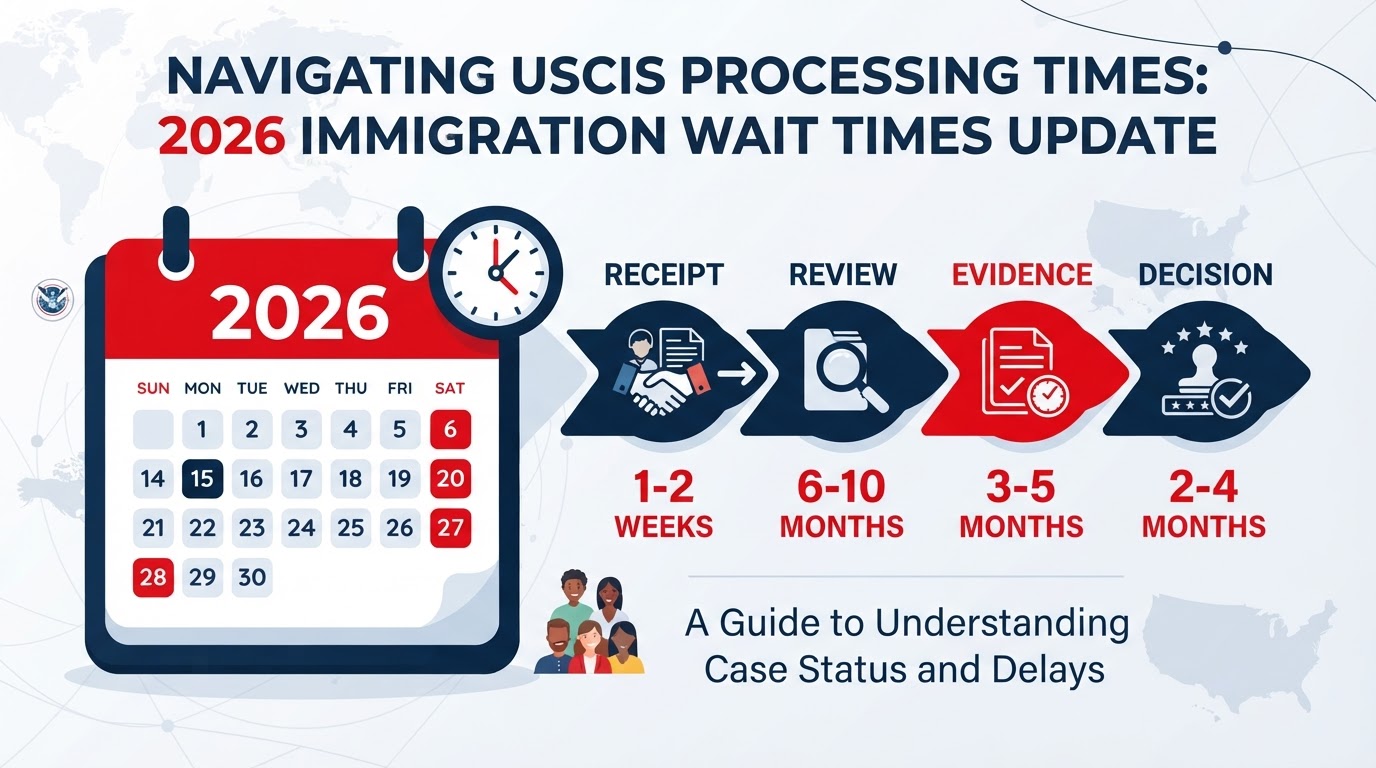
One of the most common questions immigrants ask is how long their case will take. USCIS processing times vary widely by form, service center, and field office, and they change over time. Understanding the typical timelines for 2026 helps you set realistic expectations and know when to follow up. In this guide, I'll break down the current processing times for every major immigration form and explain what you can do to avoid unnecessary delays.
How to Check Official Processing Times
USCIS publishes official processing times on its website. You select your form type, form category, and the service center or field office handling your case, and the tool shows the median time it takes USCIS to process cases. If your case has been pending longer than the posted time, you can submit a case inquiry. Always use the official USCIS tool rather than relying on forum posts or third-party estimates, which are often outdated.
Typical Processing Times by Form
Processing times are approximate and vary by location, but here are the typical ranges for the most common forms in 2026:
- ✓N-400 Naturalization: 8 to 14 months from filing to oath ceremony.
- ✓I-130 Family Petition: 4 to 12 months for immediate relatives, longer for preference categories.
- ✓I-485 Adjustment of Status: 10 to 24 months, including interview.
- ✓I-765 Work Permit: 3 to 7 months, depending on category and service center.
- ✓I-90 Green Card Renewal: 8 to 14 months.
- ✓I-751 Removal of Conditions: 12 to 24 months.
- ✓DACA Renewal (I-821D + I-765): 3 to 6 months.
Why Cases Get Delayed
Several factors can slow down a case. Understanding them helps you avoid the ones within your control:
- ✓Incomplete applications or missing documents that trigger a Request for Evidence.
- ✓Incorrect filing fees, which cause the application to be rejected and returned.
- ✓Background check delays, especially if you have a common name or prior records.
- ✓High caseloads at your specific service center or field office.
- ✓Failure to attend biometrics or interview appointments.
- ✓Address changes not updated with USCIS, causing missed notices.
How to Avoid Unnecessary Delays
While you can't control USCIS workload, you can control the quality of your application. A complete, accurate, well-organized application moves faster than one with errors or missing documents. Double-check every form before filing, include all required evidence, pay the correct fee, and respond to any Request for Evidence immediately. If you move, update your address with USCIS within 10 days, as required by law.
"You can't rush USCIS, but you can make sure your case is never delayed by something you could have prevented."
What to Do If Your Case Is Outside Normal Processing Time
If your case has been pending longer than the posted processing time, you can submit a case inquiry through your USCIS online account. If the inquiry doesn't resolve the issue, you can contact the USCIS Contact Center or request assistance from your congressional representative, who can make a congressional inquiry on your behalf. These steps are most effective when your case is genuinely outside the normal timeframe.
Get Help Keeping Your Case on Track
Understanding processing times is important, but the best way to keep your case moving is to file it correctly the first time. A trained document preparer can help you build a complete application, respond to requests quickly, and track your case status. If you want to learn to manage immigration cases professionally, our immigration form preparer training covers processing times, case tracking, and every major USCIS form in detail.

Esmeralda Maya — Founder & Lead Instructor at DoPapers.com
Esmeralda Maya is a Colombian-born entrepreneur, educator, and the founder of DoPapers, an online training platform designed to teach bilingual professionals how to complete U.S. immigration forms and start their own document preparation businesses. After immigrating to the United States in 1985, she earned a degree from Florida State University and initially pursued a career in education. In 2005, she pivoted to the legal document services industry, establishing Forms Preparation Service LLC in West Palm Beach, Florida. Over the next two decades, Maya leveraged her firsthand experience navigating the complex immigration system to develop comprehensive educational courses, transitioning her brick-and-mortar consulting expertise into the scalable digital curriculum now offered through DoPapers.
Ready to Start Your Career?
Become a certified immigration form preparer with our complete online training. Learn the forms that change lives and build a business from home.
Explore Courses →Related Articles

Affordable Immigration Help: Preparer vs. Attorney
US Citizenship N-400 Application: Checklist & Tips